Monday, February 11, 2019

Mindo Cloud Forest


Monday, February 11, 2019

We had planned to do something completely different for today, but yesterday we found out that Celebrity was offering a day tour to Mindo Cloud Forest.  Mindo had been on our radar but we didn't think we would have time to fit it in.  So we signed up with Laurie.  Actually, 15 of us from the cruise signed up as well, so it felt like another Galapagos excursion.

Checkout from the hotel was 11 am but the tour left at 8 am, so we had to leave luggage in storage at the Marriott. 

On the way, we stopped at an overlook into Pululahua Crater.  This is actually the caldera of a volcano, and it is one of only two INHABITED craters in the world!  About 40 families live there, growing corn and quinoa and raising cattle.  Very cool.  No worries, the volcano has not erupted in over 2000 years.


Next we stopped at Reserva Alambi.  This is basically some guy's backyard that he has outfitted with dozens of hummingbird feeders, and you can sit and watch them.  The gift shop was his living room with some t-shirts hanging on the wall, and the banos (washroom) was the family home banos.  There were hundreds of hummingbirds there.  Ecuador has 132 species of hummingbirds.  We saw really cool ones with long tails.  They were hard to photograph because they just wouldn't sit still for us!


After watching hummingbirds for awhile, the trail back to the bus led us through some beautiful exotic plants.


We arrived at the town of Mindo.  

Image result for mindo sign

Mindo is a small town of about 3000 people, located on the western slopes of Pinchincha Volcano, about 1200-1300 meters (3000 -8000 ft) in elevation.  This is in the Andes Cloud Forest.  It is very famous for its bird watching.

Our first stop in Mindo was Mariposario.  This was an indoor butterfly garden.  She gave us a very good explanation of the butterfly process, then we walked through to the butterflies.  Anton was able to feed one off his finger.


There was a trail outside with hummingbird feeders, and tree houses that overlooked the beautiful gardens.


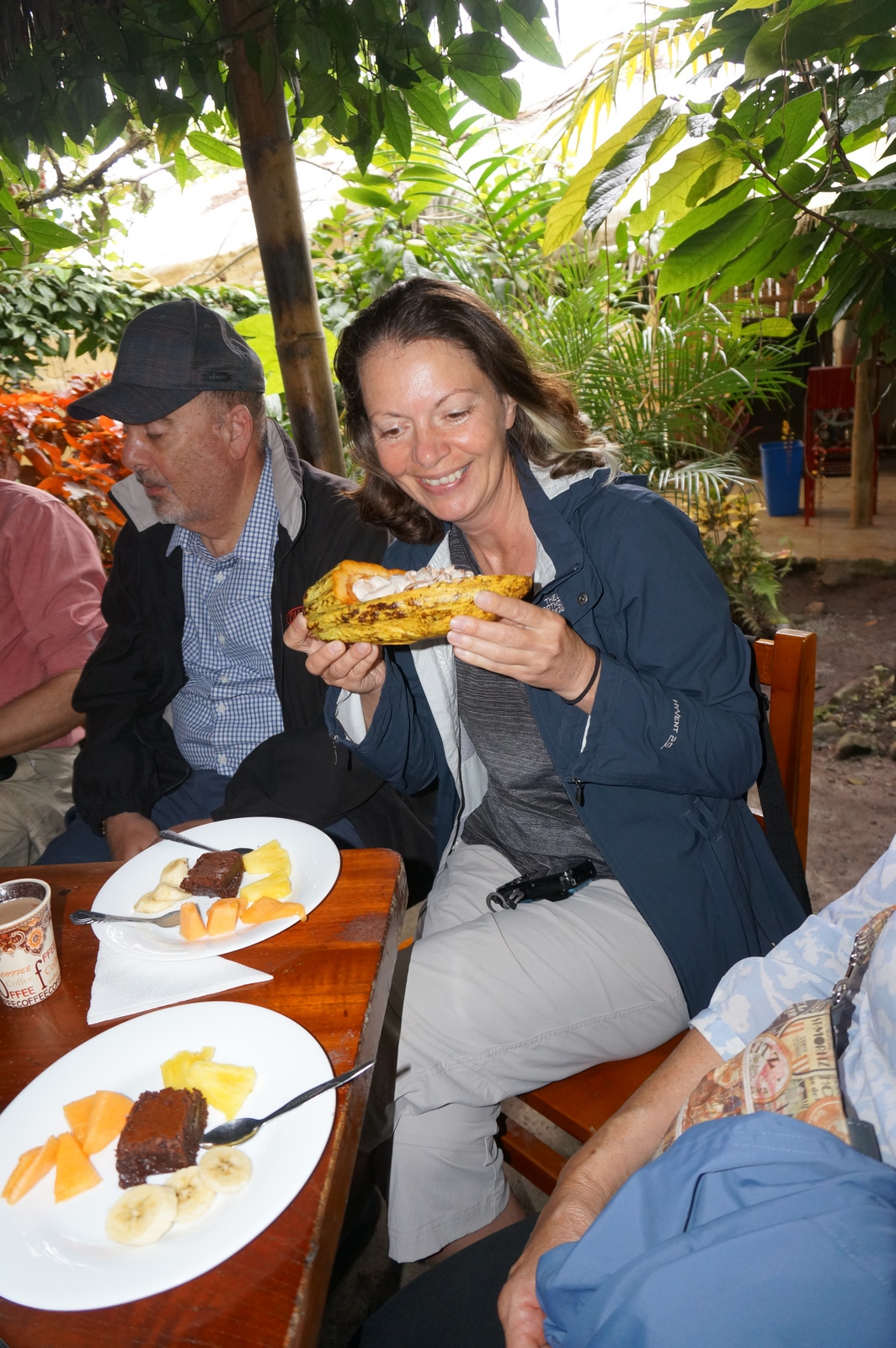
Next in Mindo we visited Yumbos Chocolate Shop.  The owner sat us outside around a table and gave us pure hot chocolate and plates of fruit and brownies.  Frankie couldn't eat hers so lucky Anton got 2 brownies.  


Then he took us and demonstrated how the cocoa beans are dried for about 4 weeks in different stages


then roasted and ground up


The whole process takes several months before the chocolate is ready!

There were samples of different chocolates to taste.  They only add sugar, not milk.  Here are some very happy chocolate shoppers:


Our tour was not over yet!  They took us to lunch at Sachatamia Rainforest Reserve Lodge.  The restaurant was immaculate, we had to cover our shoes with booties:


On the way back to Quito, we saw this sign:


Anton used his phone to try to find the exact spot of crossing the Equator.  The picture was just a second off:


We were dropped off at  JW Marriott and said goodbye to Laurie there. Instead of continuing our stay there (expensive!), we have booked an airbnb about 1 km away. A taxi took us there for $3.  Daniel's place is an apartment on the 5th floor of a 7 floor apartment building. 
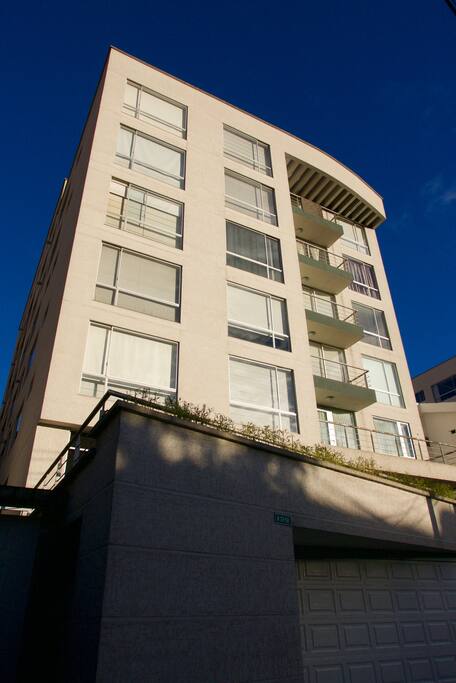

Building's main facade.
imagecredit:https://www.airbnb.ca/rooms/4580453?adults=2&check_in=2019-02-11&check_out=2019-02-14&s=O09m45WW&guests=1&children=0&infants=0

There is a full time security guard (carrying a gun) who opened the outside door for us and escorted us to our apartment.  We felt quite adventurous and went for a walk to find a market.  We asked for directions and a woman who looked very much like maybe she was a man (?) was very helpful.  The market was the size of our kitchen, but we managed to stock up on enough food for breakfasts and dinners for the next 3 days, for only $21US.  

When we got back to the apartment, we asked the security guard Juan, who spoke absolutely NO english, to take us to the roof so we could take pictures of the beautiful city at night.


Everything in the bnb is modern and new, and we have lots of space for the 2 of us, and laundry!!!
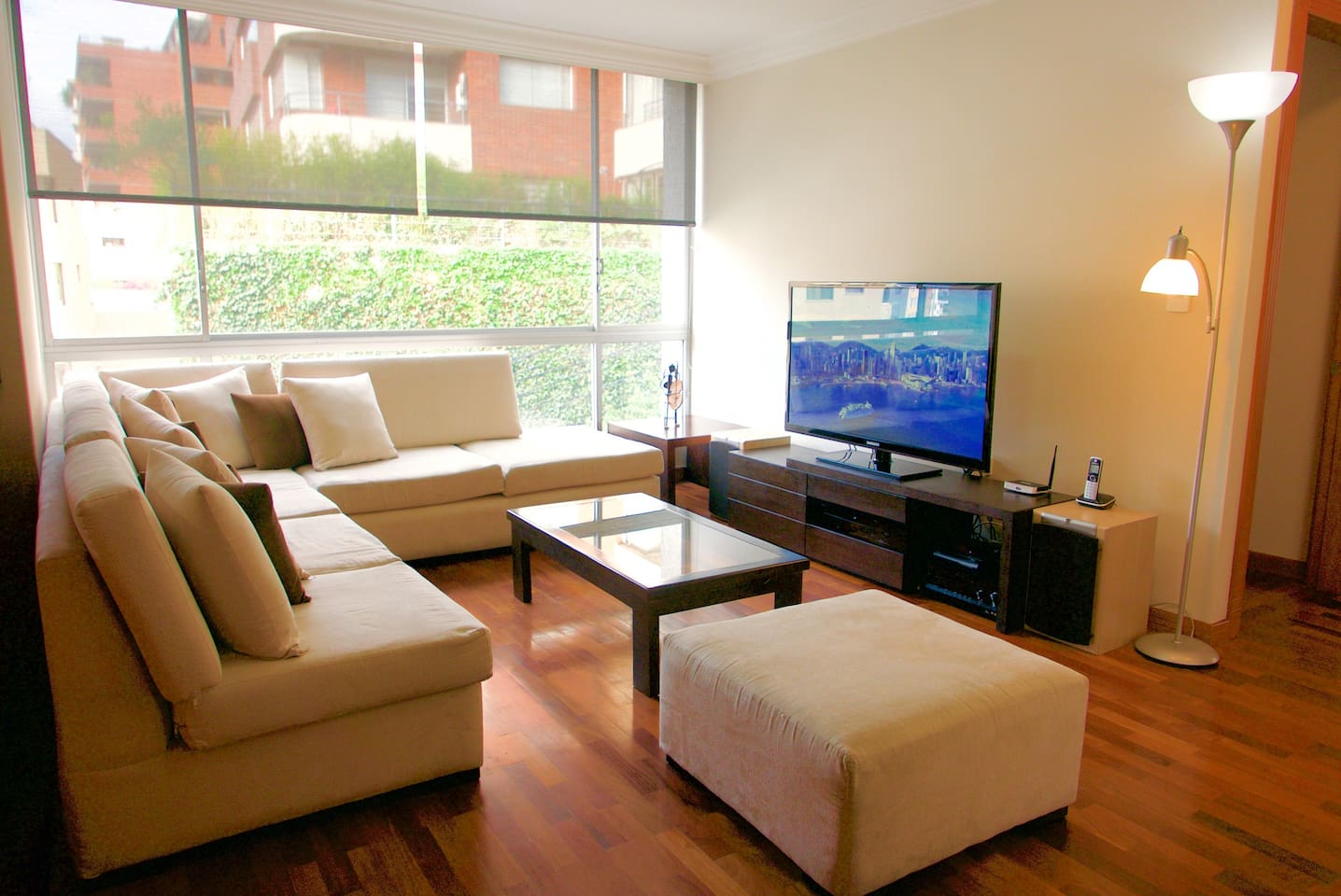

Living room with home theater and 51" TV.


Sunday, February 10, 2019

Return to Quito


Sunday, February 10, 2019

I guess they wanted us off the ship.  When we got back to our cabin after breakfast, the beds had already been reconfigured for the next guests.

We waited in the lounge for an hour, then they called us by stateroom to receive our boarding passes and zodiac number.  Zodiac #1, wahoo!  Ship to zodiac, zodiac to bus, bus to airport.

We all got to wait in the VIP lounge at the airport.


We had the exact same seats on the flight back.  The flight was 2 hours from Baltra, Galapagos, to Quito, Ecuador.


When we landed, the captain said it was a nice 10C.  We think it was more like 15C.  Once in Quito, Celebrity took us back to the JW Marriott Hotel.  We are back to the talcum powder infused tissues.  They take "powdering your nose" literally here.

Image result for jw marriott hotel quito
imagecredit:https://www.marriott.com/hotels/hotel-photos/uiodt-jw-marriott-hotel-quito/

In the afternoon, there was an optional afternoon excursion to some artisan craft shops.  The 2 shops were across the road from each other, and Celebrity sent a security guard to help us cross.  The merchandise was beautiful. 


Frankie really wanted to bring home this iguana, but for US$1200, he had to stay in Ecuador.


Celebrity provided dinner tonight at the hotel restaurant.  The menu said it was $60 per entree.  Anton's dessert was served on a marble slab. They gave all the ladies a rose when we left.


Saturday, February 9, 2019

Research Station, Tortoise Center, and El Manzanillo Tortoise Ranch


Saturday, February 9, 2019

It finally rained today.  Twice.  Both times for 5 minutes.  Both times we happened to be under a roof at the time.

Today we were at the southern coast of Santa Cruz Island, docked all day from 7 am to 7 pm at the major port town of Puerto Ayora (again named after a president). This town is home to half of the Galapagos 25,000 residents, and is a major tourism hub. Many tours depart from here. The town has a hospital, banks, post office, and even a radio station. This is where the Galapagos National Park headquarters and the Charles Darwin Research Station are located.


We had to zodiac and then bus and then walk to the Research Station (a 10 minute walk from the center of town). The Research Station has a team of over 100 scientists, educators, volunteers, and research students. The Research Station gives environmental education and conducts extensive research on conservation.


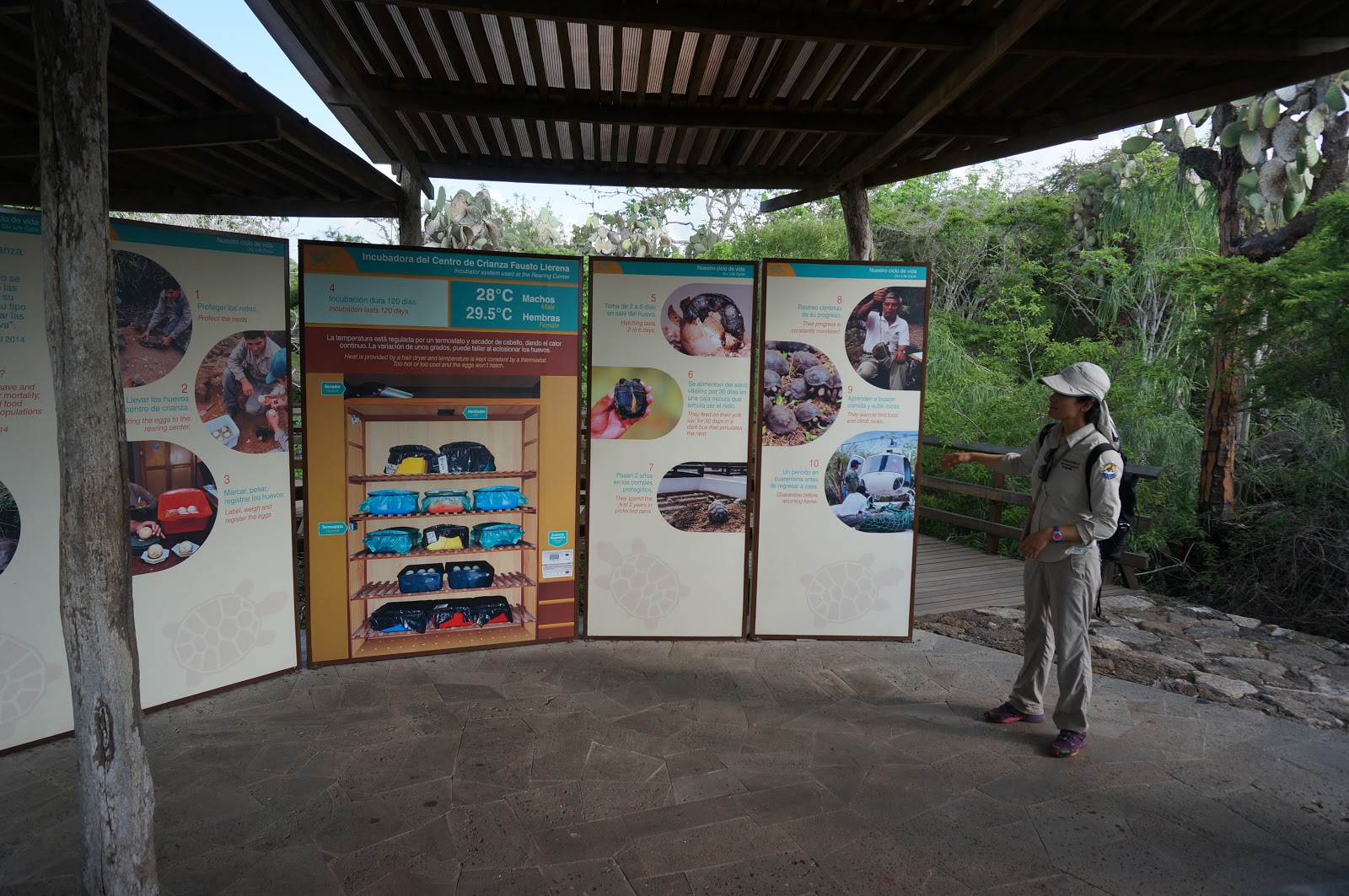
The Fausto Llerena Tortoise Center (breeding center) is here. This is a joint program between the Galapagos National Park and the Charles Darwin Foundation. It was started in 1965 to save the giant tortoises on several different islands.


They had pens of tiny baby tortoises divided into different islands.  The tortoises from different islands have a different colour paint mark on them.


Tortoise eggs are actually brought here from the islands to hatch, to protect them against feral cats and rats.  The scientists can determine the gender of the tortoise babies by controlling the temperature in the incubation chamber.  They prefer female tortoises to keep the population strong.  When they are 7 years old, they will be released back onto its own island.  Tortoises don't incubate their eggs, so it is not really breaking any family bonds.


How did the giant tortoises become so endangered? At one time the islands held perhaps millions of tortoises. But in the 1800s they proved easy to catch for sailors and whalers, who enjoyed their delicious oily meat and buttery taste. Even Charles Darwin himself feasted on a few of these giants. The tortoises were also harvested for their oil. In recent years, introduced species such as rats, pigs, and dogs prey on the tortoise hatchlings. Goats and donkeys destroy tortoise habitat. In the space of a few years, the numbers dwindled to just a few thousand, and they disappeared completely from some of the islands, including Pinta.

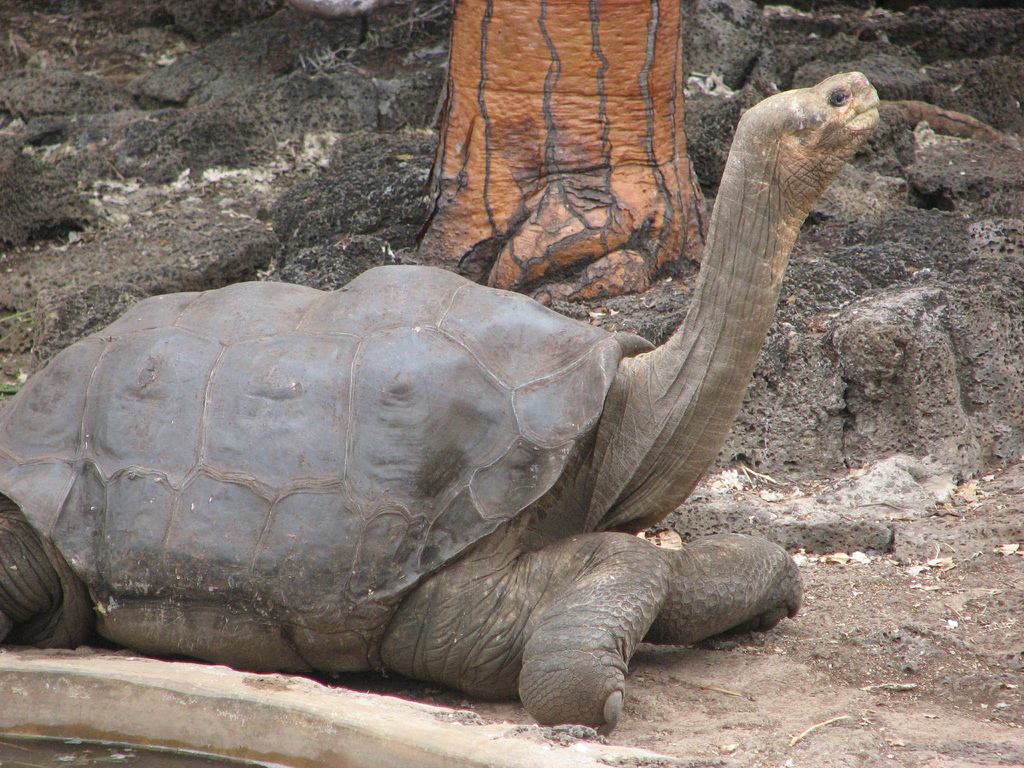
For many years the Giant Pinta Tortoise was thought to be extinct, until a snail scientist found Lonesome George in 1971. He was brought to the Research Station and given 2 potential mates, but all 13 eggs laid were infertile. He died of natural causes in 2012. He was estimated to be between 90-120 years old. Scientists were surprised at his death, since his subspecies was known to live up to 200 years.


Image result for lonesome george tortoise
imagecredit:https://en.wikipedia.org/wiki/Lonesome_George

Lonesome George was kept on deep freeze, then given to New Jersey taxidermists to preserve. It took them more than a year and $30,000. In life, George weighed 165 pounds; now is just 50 pounds. George was displayed at the American Museum of Natural History until he was brought home in 2017. The Ecuadorian government wanted him displayed at the natural science museum in Quito, but the Galapagos local mayor felt he should be returned to the home where he lived for 40 years.  This is from when he was in New York:


Lonesome-George.jpg

The following is inscribed outside Lonesome George's enclosure:

 “Whatever happens to this single animal, let him always remind us that the fate of all living things on Earth is in human hands.”

Up to 15 species of Galapagos tortoises have been identified, although only 11 now survive. They are all considered to be endangered. They can weigh up to 600 pounds and live to be over 150 years old. They can survive several months without food or water.

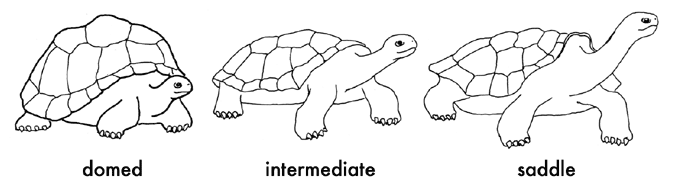
The tortoises come in 3 main shapes. The Saddle-backed have raised shells that allow them to lift their head to eat. They have longer limbs and necks. The Dome-shaped Tortoises have a rounded shell and they eat lower vegetation. The Intermediate Tortoise is a subspecies of the above 2, with flatter tabletop shells. In all species, the males are larger than the females and have concave undershells.


Image result for the differences between the galapagos tortoises on different islands
imagecredit:https://www.slideshare.net/thankachan.vp/evolutionary-theory-in-21st-century

Did you know that a tortoise is like a tree? As it ages, it develops rings inside the individual plates (scutes) that make up its carapace (shell).

Image result for growth rings on tortoise
imagecredit:https://www.pinterest.ca/pin/56365432812635553/?lp=true

The Galapagos Tortoise has even been subject to illegal animal trafficking. In April 2017, 29 juvenile Galapagos Tortoises were seized by the Peruvian police. In June 2018, 26 of them were successfully returned to the islands. Because they are so small, it is not yet possible to determine their species or island.

The Fausto Llerena Tortoise Center includes a “tortoise training ground”, where young tortoises learn to navigate on terrain that might be found on their own home islands. This helps them survive when they are released there.

After our tour, the 2 of us and Laurie headed down towards the port.  Of course, the street was littered with tourist shops.  We hit every one quickly in search of the perfect plate for our collection.  When the 2 of us finally found one we both liked, we balked because it was $35US.  Yikes!  Then a few shops down, Frankie found the same one for $19, so we snatched it up.  We suspect the salesgirl was not in the "know", because we saw her pop into another shop afterwards and ask how much they were selling the plate for.


We found a yummy Galapagos chocolate shop:


We stopped at the open-air fish market, where it was entertaining to watch pelicans and sea lions begging for scraps.


We hopped on buses and were given an opportunity to participate in the Scalesia Reforestation Project. Celebrity Cruises partners with the Galapagos National Park to reclaim landscape that has been overtaken by weeds (especially blackberry) or cut down to make room for agriculture. Guided by naturalists, guests have helped to plant thousands of seedlings of the endemic Scalesia tree (also called Daisy Trees). In areas where the Scalesia have been replanted, natural wildlife and birdlife has increased significantly.


We felt a little ripped off, since the holes were already dug for us!  But it was fun, and passengers from our ship alone planted 200 trees today.


The Scalesia trees are not actually a tree at all. They are giant members of the daisy family. They grow to be 20 meters (65 feet) tall, with trunks that are 60 cm in diameter. They look like trees but have shrublike qualities, and grow about 4 meters in their first year alone.


The trees are actually all the same size. Since they grow so quickly, they create a canopy cover which casts a shadow on the forest floor. That prevents younger trees from growing. Occasionally, the Scalesia will be wiped out by natural events such as the El Nino of 1982-83 which softened the roots with its excessive rainfall. When population crashes occur, the dormant seeds on the forest floor will grow to take their place as a new forest. However, the forest floor seedlings are now in danger from roaming goats and pigs.

Next we took a bus to the highlands to El Manzanillo Tortoise Ranch.  We had lunch and local folkloric dancing.


Then they even offered boots to keep our feet dry, since the grounds were a bit muddy (and also full of tortoise poop).


We followed our naturalist and roamed the grounds to look for the tortoises. 


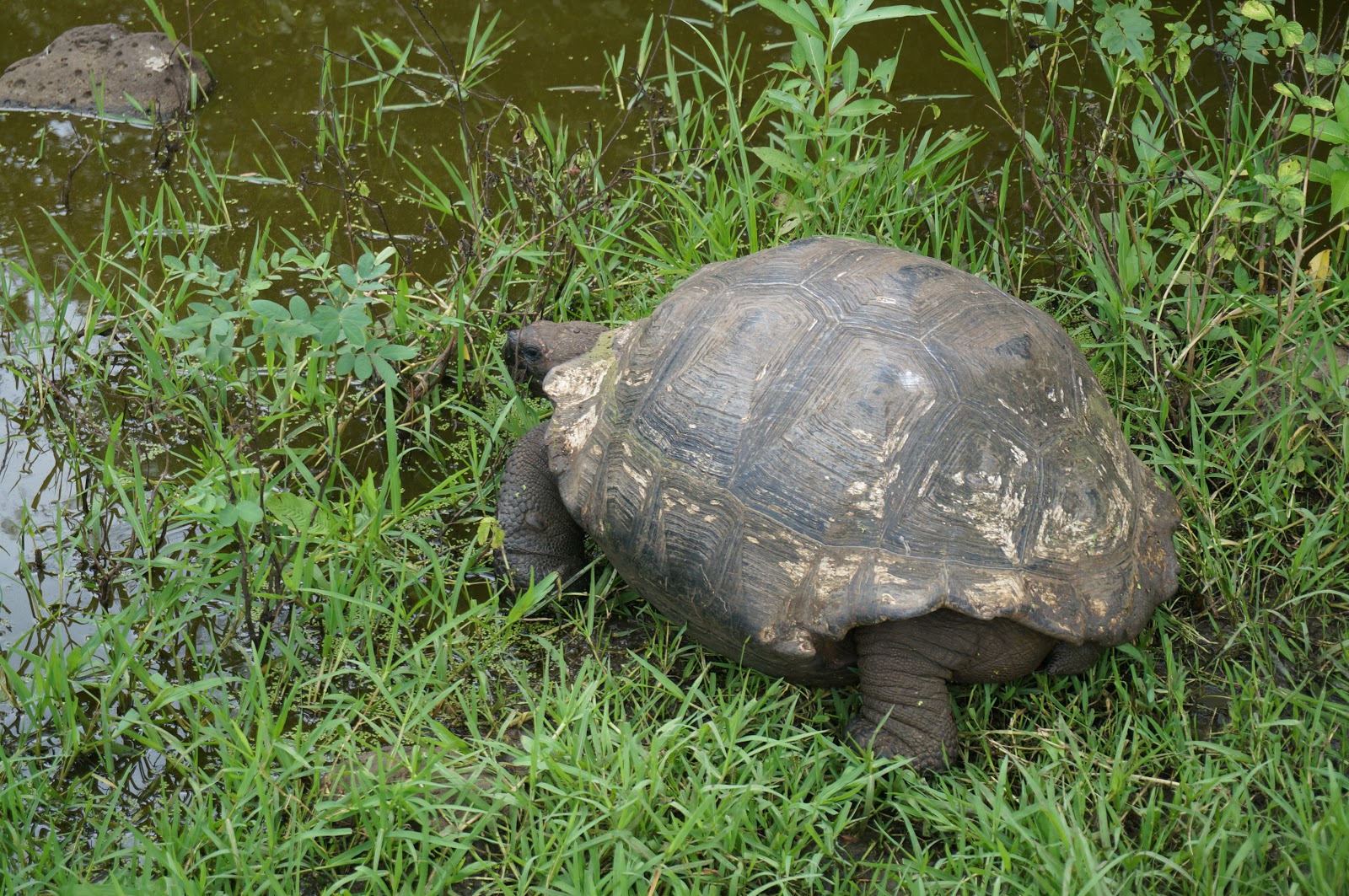
One of the tortoises got really mad when Frankie got too close.  It let out a hissing sound (Anton said it was like an air mattress deflating), and retracted its head.


We were bused back to the main town of Puerto Ayora, where we had the option of staying on our own.  So we wandered around town and found tons of day excursion companies.  We were looking for a Galapagos flag since they are slightly different than the Ecuadorian one.  We stopped at one shop and they could not understand what we wanted, so he phoned his son who spoke english.  It seems we were looking for a "banderos de Galapagos".  Their suggestion was the tourist shops.  We tried those already.  Oh well.

Image result for galapagos flag


The port is not your typical port:  there were marine iguanas swimming around, sea lions hanging out, a sea turtle nibbling algae off a boat, and even some Blacktip Sharks swimming around.


We packed most of our things this evening.  Where did all this stuff come from?!?!

Friday, February 8, 2019

South Plaza Island and Santa Cruz Island


Friday, February 8, 2019

In the morning, we were at South Plaza Island (7 am to 11 am). The Plaza Islands are twin islands off Santa Cruz Island. North Plaza Island is closed to visitors, apparently because they have a rat problem. South Plaza Island is about a km off the coast of Santa Cruz, and is one of the preferred visitor sites. The whole island has an area of 0.13 sq km. About 1½ km long and 250 m wide – tiny!

imagecredit:https://animalcorner.co.uk/south-plaza-island/

The island was born during a geological uplift of the sea floor and it tilts to the north, with cliffs on the southern coast. 


We took the "long walk" option (about 2 hours).  There is a circular trail that leads to a 25 m (82 ft) high cliff.


There is a "forest" of large prickly pear cactus, as tall as trees.


There were lots of tiny lava lizards, and the bigger land iguanas:


Since the land iguanas eat the cactus, the Galapagos National Park is making an effort to plant and protect young cactus.  Can you see the red cage?


A lot of the island is covered in Sesuvium (Carpetweed), a succulent plant species. It is yellowish green in the wet season and red in the dry season.


On this island you can find Swallow-tailed Gulls, the only nocturnal gulls in the world. We watched as a pair mated, it took 7 tries.  They mate for life.  They lay a single egg in gravel:


There is a large colony of sea lions.  It was so hot out that we were jealous of them frolicking in the surf.  This is our landing site:


There are hybrid iguanas that are a mix of male marine iguanas and female land iguanas. Our naturalist said the scientific name for them was "Weirdos".  Unfortunately, we did not see any weirdos besides fellow passengers.  And ourselves.


One of the ladies this morning fell while getting off the zodiac.  She was looking at her phone.  We have been told so many times to look where we are going.  She fell and hit her head and was bleeding a lot.  There was talk of helicoptering her to the mainland, but she just got stitched up and wants to continue the cruise.

After lunch, Frankie treated herself to a massage.  But she forgot the cruise ship policy of greasing you up better than a Butterball turkey.  Shower #2.

In the afternoon, we were on Santa Cruz Island (3 pm to 9 pm). Santa Cruz is the second largest island at 986 sq km, and is very central to all the islands. Elevation is 2835 feet (864 m). Santa Cruz means “Holy Cross” in Spanish. It is also called Indefatigable by the English. Santa Cruz is actually a large, dormant volcano. One of the lava tunnels you can walk through is over 6500 feet (1981 m) long.

It is one of the populated islands, with 12,000 residents. They all have to live on 3% of the island, since the other 97% is national park.  Some tourists stay on Santa Cruz and take day trips to other islands, instead of booking a ship like we did. That would be cheaper, but the day trips involve long, choppy boat rides, little time on the islands themselves, and no access to the farther islands.

Image result for santa cruz island galapagos map vacations to go
imagecredit:https://www.vacationstogo.com/cruise_port/Santa_Cruz__Galapagos_Islands__Ecuador.cfm

Our stop this afternoon was at Dragon Hill (Cerro Dragon), on the northwest coast of Santa Cruz. The name comes from its population of land iguanas. This site has a direct relationship with the Galapagos National Park and Charles Darwin Foundation conservation program. In 1975, feral dogs wiped out the population of land iguanas. The program moved all the iguanas to a different islet called Venecia, but they would not breed there.  So they brought soil from the iguana's home island and then they started to breed.  After several years, the feral dogs were eliminated, and they were successful in bringing land iguanas back to the area.  Every 3 years or so, they are still bringing iguanas back from Venecia.

There are 2 small brackish lagoons, we did not see flamingos today.


The trail has a "forest" of cactus


and  a “white forest” of Palo Santo trees (incense trees). The name Palo Santo means “Holy Wood” for its mystical qualities.


A lot of people are tired and opted out of the walks today, but it seems the same group of us always want to take the long walk option.  


This island is full of large land iguanas, probably the largest we have seen.  There is a lot of vegetation here for them to eat.


Victoria our naturalist had just finished telling us how all the goats were eradicated because they are not endemic and they destroy the habitat of the iguanas.  When lo and behold, a baby goat appeared on our path and danced and pranced for us.  Unfortunately for him, Victoria has to report him to the national park.


This is at the top of Dragon Hill.  If you are wondering why we are always wearing different clothes, we have to change a lot because of the heat and sweat.  Today was over 30C.  It was supposed to be an El Nino year, but that does not seem to be happening.  When we left for this trip, the forecast said we were supposed to have rain every day.  Hmmm, maybe tomorrow???


Poor Laurie tripped over a rock, and when she put her hand up to steady herself, she was on the wrong end of a cactus.  So she had to see the doctor when she got back on board the ship.

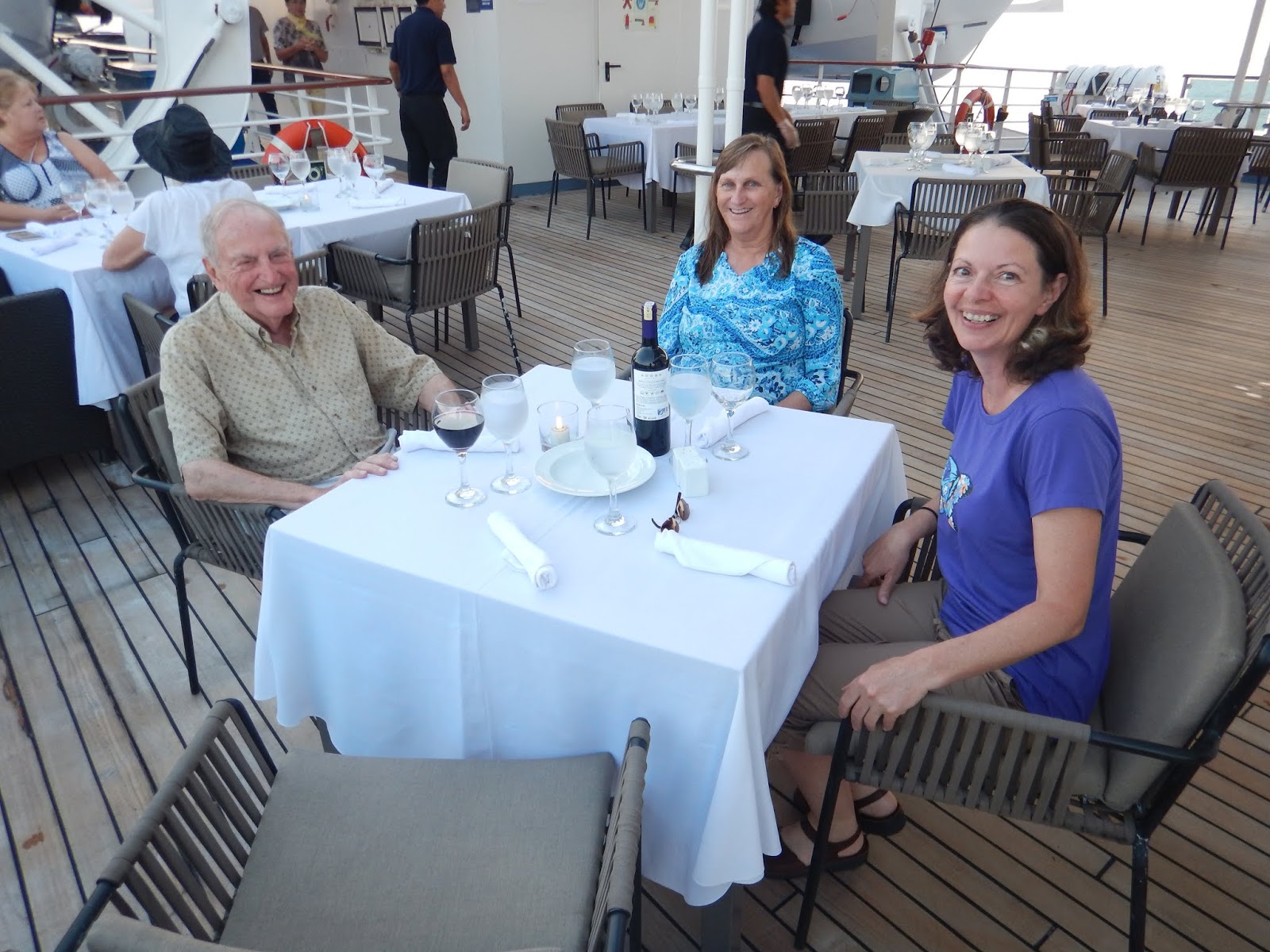
When we got back, it was shower #3, and then dinner tonight was a BBQ for everyone on deck.  Laurie and John had a table reserved for us to watch the sunset.  This did not look like your average BBQ.  All the tables were fancied up.


We saw a bit of sunset, but what was more exciting was watching 4 Galapagos Sharks swim around the ship.

Image result for galapagos shark at night
imagecredit:https://www.goscubadivemaui.com/underwater-photo-of-the-week/2012-08-20